
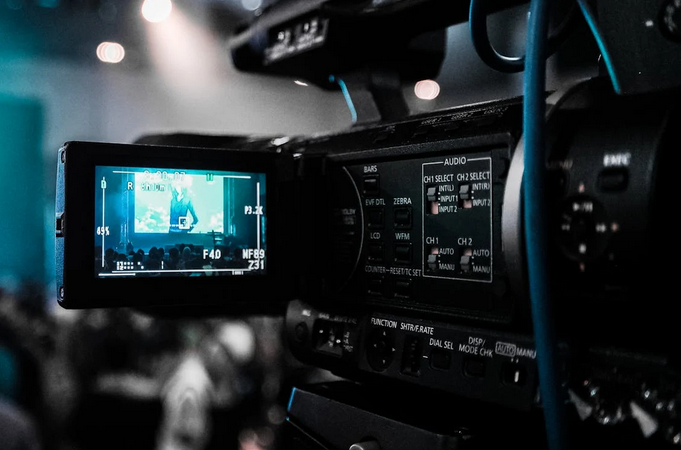
Artificial intelligence has been creeping into the film industry for years, but in 2025, it is no longer just a backstage tool. It is a front-row player, reshaping how stories are written, how visual effects are created, and even how films are marketed. What used to take months of planning and entire teams can now be completed in days with help from AI. That is not science fiction anymore. Script assistants powered by AI can suggest dialogue tweaks. Animation tools can bring creatures to life with just a few prompts. Some actors are even licensing their likenesses so AI can replicate their appearance for scenes they never actually filmed. While this might sound like a shortcut, it is more like a shift in how creative teams work. Directors still call the shots, but they are now doing so with a faster, smarter toolbox. It is not about replacing artists. It is about redefining what is possible on screen, and how quickly it can happen.
Smarter Scriptwriting and Faster Edits
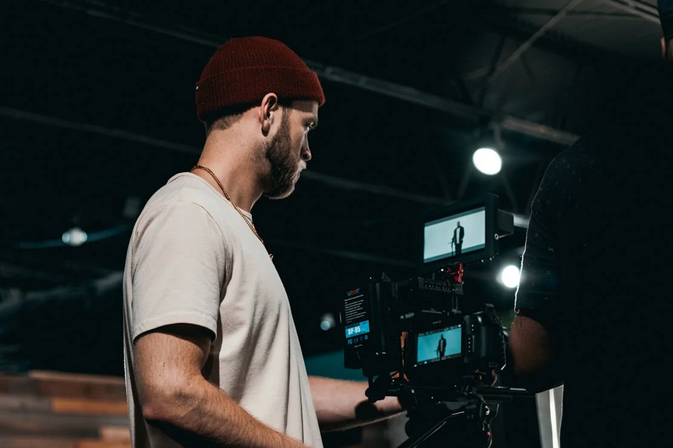
Writing a screenplay is still an art, but AI has become a powerful co-writer for many professionals. Tools now exist that can analyze story arcs, predict audience reactions, and suggest ways to tighten pacing or improve character dialogue. It does not mean filmmakers are handing scripts over to robots. Instead, they are using AI like a smart assistant who never sleeps. It can help flesh out secondary characters, track emotional beats, and even flag plot holes early in development. In the editing room, AI software can now scan hours of footage and identify the best takes based on facial expressions, audio clarity, and scene continuity. That used to take editors days or weeks. Now, the rough cut can be assembled in a fraction of that time, giving directors more breathing room to focus on storytelling rather than sifting through raw clips.
Visual Effects Are Cheaper and More Impressive
Whether it is aging an actor by 30 years, generating realistic landscapes, or even creating entire background crowds, AI can handle it all with stunning precision. Smaller studios benefit the most. They can now compete visually with major blockbusters without draining their budget. Some indie films in 2025 look as sharp and polished as anything released by the big players, thanks to AI-enhanced post-production. This technology is also changing how scenes are shot. Directors can use AI-generated previsualizations to plan action sequences, adjust lighting, or test out different visual styles before shooting a single frame. It is giving filmmakers more freedom, not less, and turning bold ideas into real scenes faster than ever before. The result? More ambitious movies, even from underdog creators.
AI is not taking the soul out of movies. It is just giving creators new ways to tell their stories. Whether it is a script being fine-tuned by an algorithm or a sunset rendered entirely by code, the magic still comes from the people behind the scenes. AI is just helping them get there quicker and with fewer roadblocks. In a world where attention spans are short and budgets are tighter than ever, having a tool that can speed up production and amplify the exciting parts is a game-changer. For better or worse, AI is now part of the movie-making team. And judging by what we are already seeing in theaters, it is earning its credit.

 Most of these games are meant for improving your coordination ability. This is achieved by the stimulation of your mind to stay focused and ready to respond to various challenges. For you to be a winner, you must be able to coordinate your visual, audial, and your physical movements effortlessly.

 “The Others” is a haunting and atmospheric film that will keep you on the edge of your seat. Set in a remote mansion during World War II, it tells the story of Grace Stewart (played brilliantly by Nicole Kidman) and her two young children who suffer from a rare sensitivity to light. As they await the return of their father from war, strange occurrences begin to unfold within the house.
 Also, the person you want to text bomb should have a playful relationship with you. You should avoid text bombing someone who is too sensitive or can get angry easily. Find someone you can joke with and who might not get annoyed easily. Ideally, the person should find it fun and forgive you quickly. You should avoid using text bombing to bully another person. It is easy to trace messages back to you, and this can result in serious consequences.
 If you are interested in sending a meaningful message and not gibberish to your friend, you should break your message word by word. You should not worry about spelling – you need to type and get the message as quickly as possible. For instance, you can try to send the lyrics of an entire song. If you want to send the message repeatedly, copy and paste it into the text box rather than typing it out.